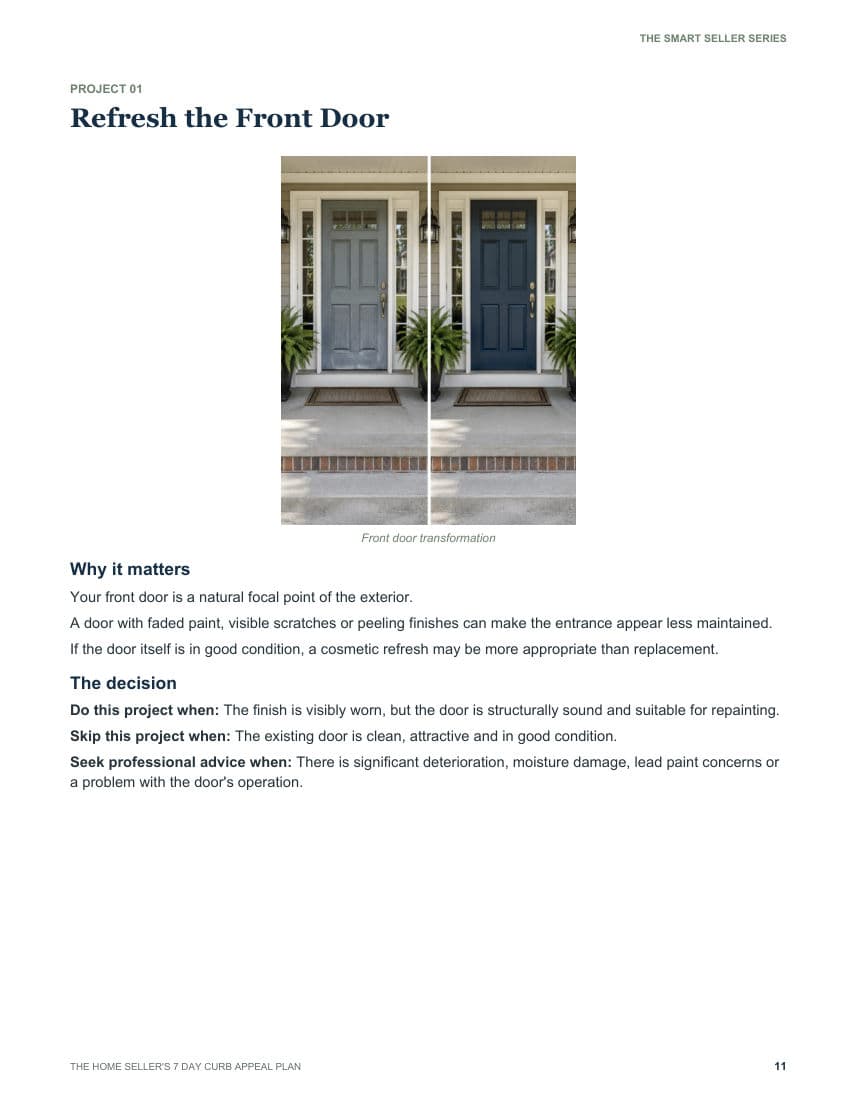
Front door
Do it when: The finish is visibly worn, but the door is structurally sound and suitable for repainting.
Skip it when: The existing door is clean, attractive and in good condition.
Selling Your Home? Start Outside.
Use a practical 7-day plan to decide which exterior improvements deserve your time and budget — and which ones to skip before listing your home.
Instant PDF Download · Practical Checklists · No Unnecessary Projects
Next: review your order, then pay securely with Stripe. The Home Seller’s 7 Day Curb Appeal Plan, digital product, nothing is shipped.
The Smart Seller Series
The Home Seller’s 7 Day Curb Appeal Plan
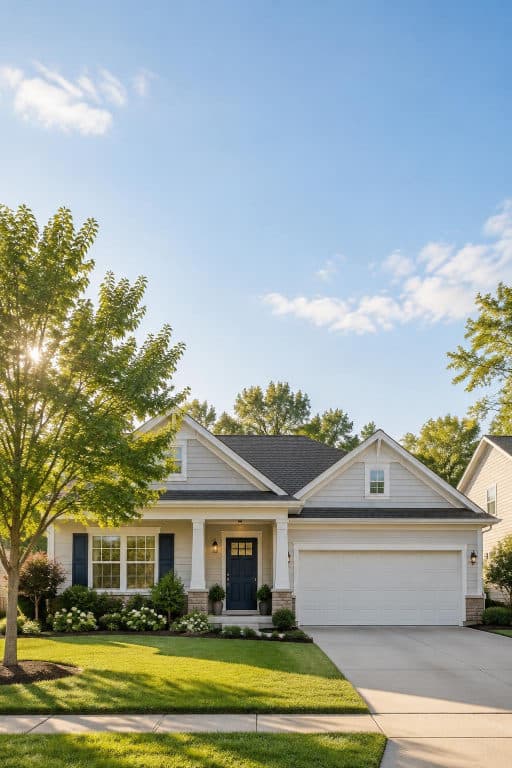
The guide’s cover
Fresh paint, new landscaping, pressure washing — which projects actually deserve your budget?
This guide helps you evaluate your options before committing time and money. It is a decision guide, not a list of home improvement ideas: a project you correctly skip can be just as valuable to your budget as one you complete.
A common situation
Repaint the front door? Refresh the landscaping? Pressure wash the driveway? Every project seems to promise a better first impression, and it’s easy to spend on the wrong ones:
The guide’s answer is: it depends on what your house actually needs. If the front door is clean and in good condition, skip it. If the driveway only needs cleaning, clean it before considering anything more expensive. You make the decisions in the right order, with a spending ceiling set before you shop.
Illustrative example, not a customer story.
The numbers come first
A practical decision method, not just a list of improvements. You score each project’s condition, estimate its cost and set a spending ceiling before you buy anything. Your budget is a limit, not a target.
What to fix
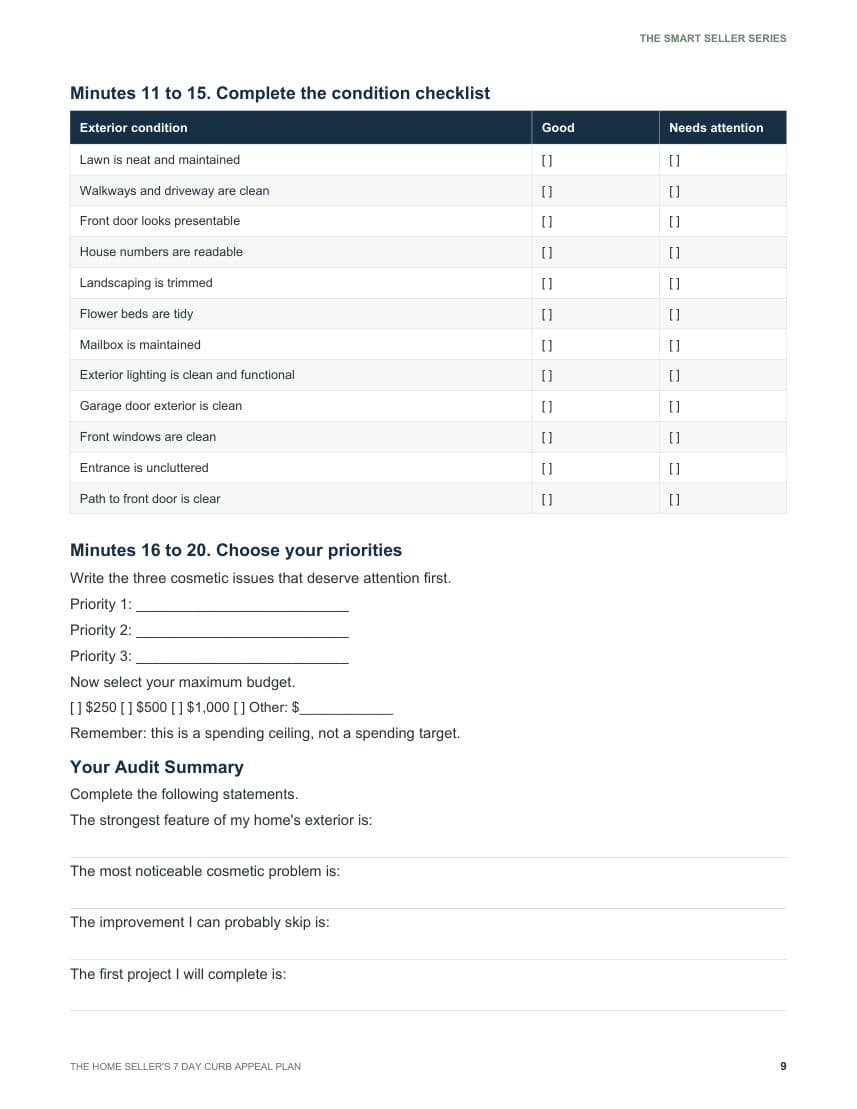
A 20 minute exterior audit, a 0–3 condition score for each project, and three priorities to finish first (the Rule of Three).
What to skip
Every project has a “skip this when” test. A project you correctly skip protects your time and your budget.
Where to spend
A spending ceiling of $250, $500 or $1,000 (or your own), planning cost ranges for each project, and a contingency reserve.
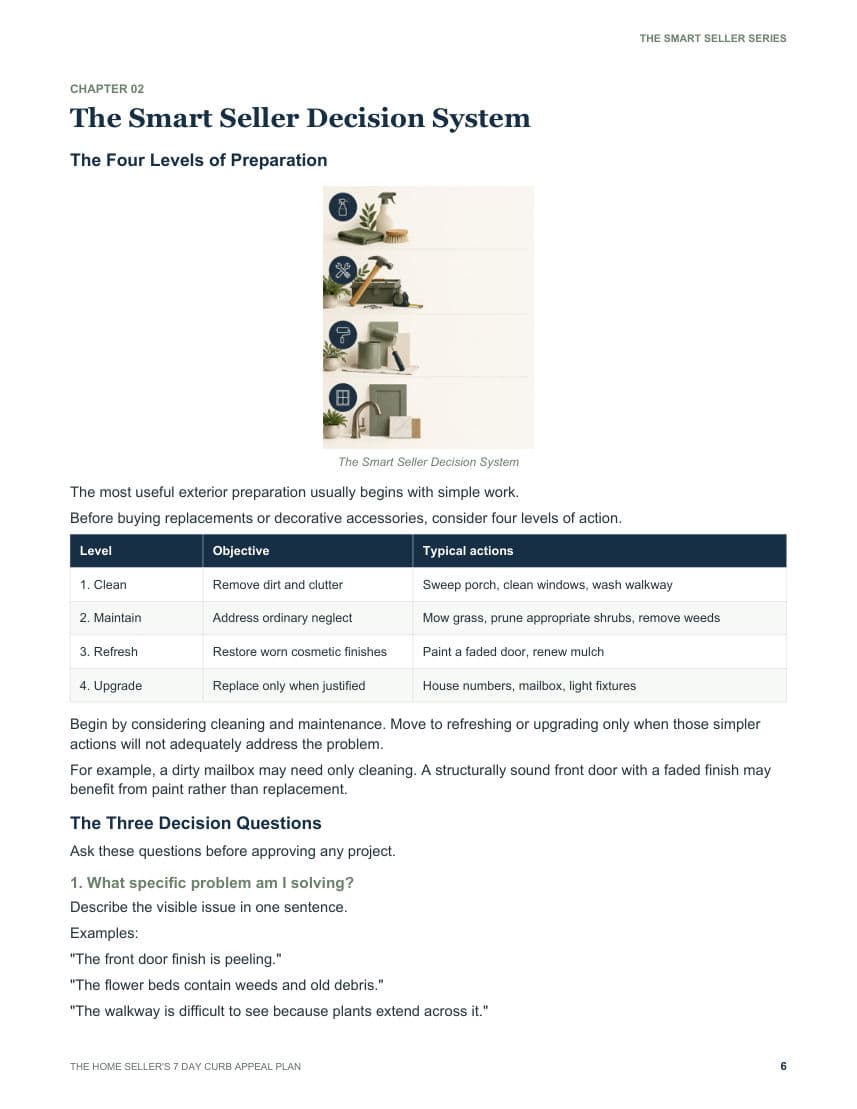
| 1. Clean | Remove dirt and clutterSweep the porch, clean windows, wash the walkway |
| 2. Maintain | Address ordinary neglectMow, prune appropriate shrubs, remove weeds |
| 3. Refresh | Restore worn cosmetic finishesPaint a faded door, renew mulch |
| 4. Upgrade | Replace only when justifiedHouse numbers, mailbox, light fixtures |
Every idea goes through three questions, starting with the cheapest level of action. Unused budget isn’t a missed opportunity. It’s money you chose not to spend unnecessarily.
How it works
BeforeGuessing which improvements deserve the budget.
AfterA prioritized plan for the next seven days.
The schedule organizes only the work you selected. Some homes need less time, some need more because of weather, drying times or professional appointments. Adapt it to your situation.
Do this · Skip this
It depends on their condition. Each of the twelve projects has its own test for when it’s worth doing and when to skip it, with safety notes on when to call a professional. A few answers from the guide:
Do it when: The finish is visibly worn, but the door is structurally sound and suitable for repainting.
Skip it when: The existing door is clean, attractive and in good condition.
Do it when: It is visibly rusted, damaged, dirty or has a deteriorating finish.
Skip it when: It is clean, functional and visually consistent with the property.
Do it when: Fixtures are dirty, visibly corroded, damaged or no longer work properly.
Skip it when: Existing fixtures are clean, safe, functional and proportionate to the entrance.
Do it when: The door is visibly dirty or stained.
Skip it when: It is clean, functional and visually appropriate. Don’t repaint or replace it.
Do it when: Beds contain weeds, accumulated debris or visibly deteriorated mulch.
Skip it when: Existing beds are tidy and healthy.
Look inside
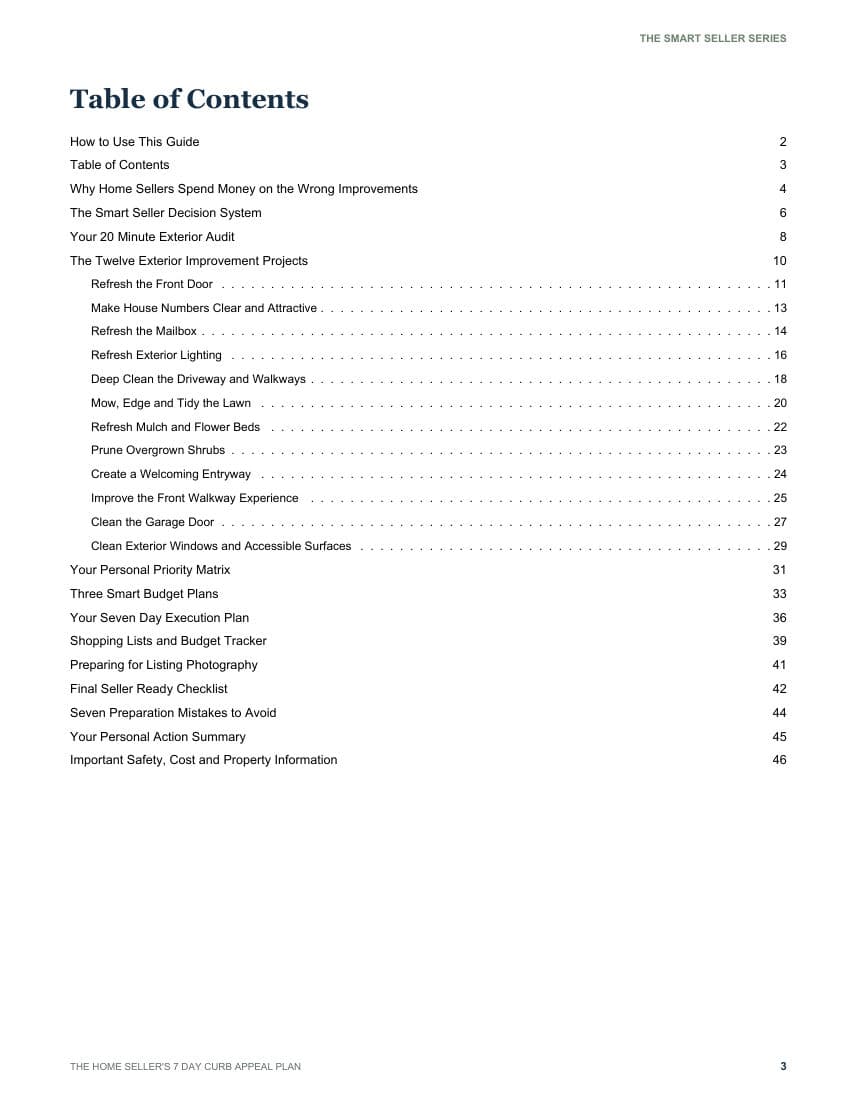
Real pages from the 46-page guide. Start with the priority matrix, set a budget ceiling, then work through the seven-day plan.
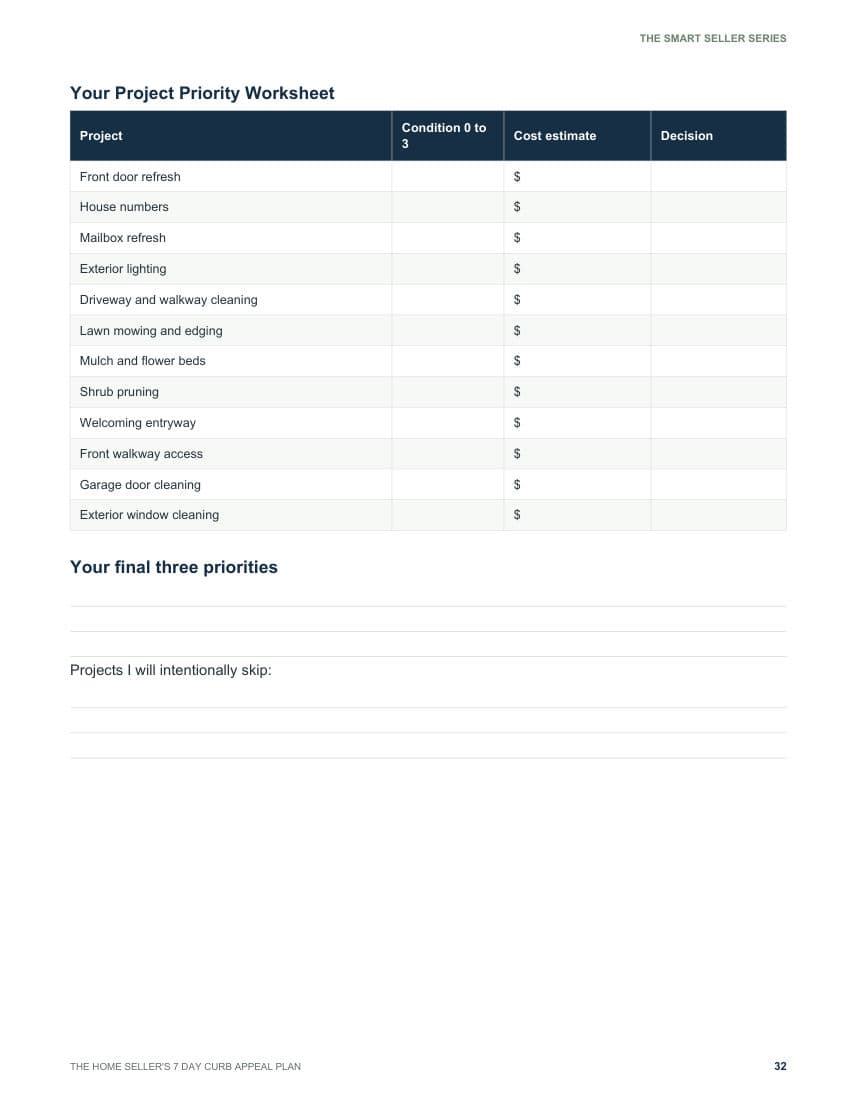
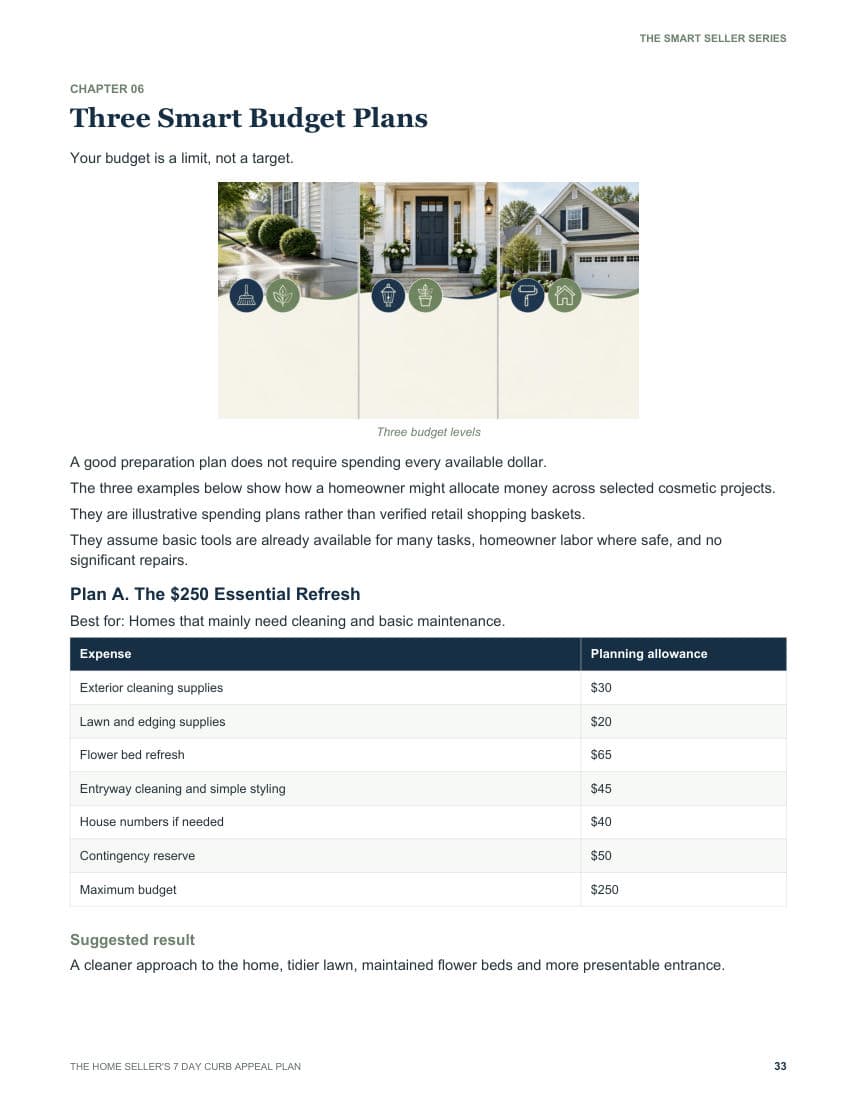
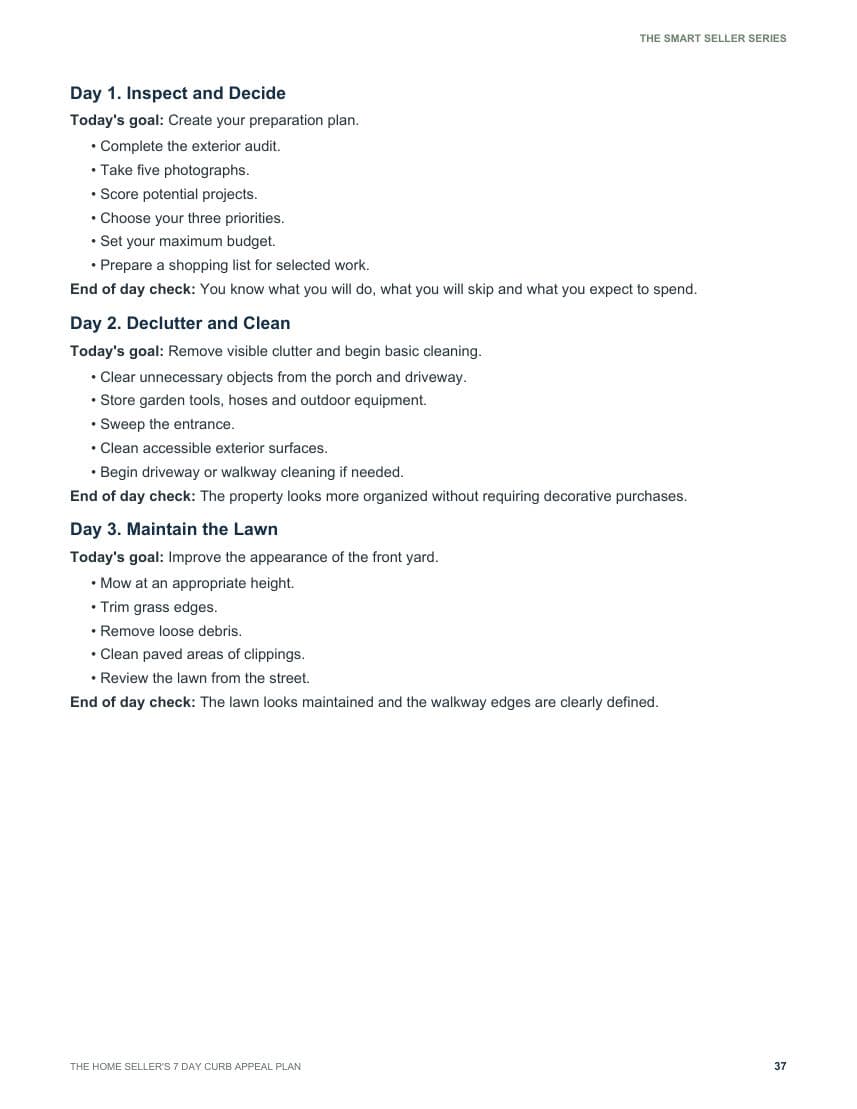
Swipe to see more pages.
What’s inside
Plus a closing chapter on safety, cost and property information, and a 2-page Start Here guide.
What you’ll be able to do
The same guide gives different homes different project lists. In the guide’s own example, one owner needs only driveway cleaning and flower-bed maintenance; another prioritizes a peeling door, overgrown shrubs and hard-to-read house numbers.
Is it for you?
One-time purchase
$27USD
Next: review your order, then pay securely with Stripe. Digital download only. On the order page you can optionally add an editable budget workbook and printable checklists. It’s unchecked unless you choose it.
Questions
A checklist tells you what could be done. This guide helps you decide what your house actually needs: a 20 minute audit, a do / skip test for each of the 12 projects with planning costs, time, difficulty and safety notes, a priority matrix, three budget plans and a seven-day schedule, plus worksheets to write your own plan. It is built to help you avoid spending on projects your home doesn’t need.
Yes. The smallest plan is a $250 Essential Refresh for homes that mainly need cleaning and basic maintenance, and many projects start with cleaning rather than buying anything. Your budget is a ceiling, not a target.
Yes. It covers cosmetic exterior preparation you can plan on your own, before or while you talk to an agent. For pricing, disclosures and listing photography practices, the guide recommends talking to your real estate professional.
No. It is a 46-page PDF you download right after payment. You can read it on a phone, tablet or computer, or print the worksheets. Nothing is shipped.
We can’t promise that, and neither does the guide. Its point is to help you decide which exterior work your home actually needs, skip what it doesn’t, and stay within a spending limit. Sale price depends on your market, location, pricing and the property itself.
No. The guide says it plainly: your home may need twelve improvements, three, or just a thorough cleaning. The project pages are a reference library, not a renovation checklist.
They are preliminary US material planning ranges for small cosmetic projects done by the homeowner, meant for comparing options, not verified retail prices. Taxes, rentals, professional labor and repairs can add to them.
No, this guide is about the exterior. A separate Interior Prep Plan uses the same decision system; after your purchase you’ll get a one-time option to add it. That’s entirely optional.
Yes. Many projects start with cleaning and basic maintenance, and the guide tells you when work should go to a qualified professional instead: electrical work, garage door springs, elevated work, structural or moisture concerns.
No. It is general educational guidance for cosmetic exterior preparation. It isn’t an inspection, appraisal or legal advice. For pricing and disclosure questions, talk to your real estate professional.
You can request a refund within 30 days of purchase. See the Refund Policy for details.
Fix what needs attention. Skip what does not. Spend with purpose.
Your home does not need to be perfect. It needs to be presented with care.
Get the 7-Day Plan — $27Next: review your order, then pay securely with Stripe.